
While floor area can be listed metrically it is common in the UK to use imperial measurements. To find the value of your UK property by its square footage, divide the home’s total estimated value by its floor area in square feet to get a £ per sq ft rate. It is possible to cross-reference this against local averages using specific postcode estimators.
⬇ Download the printable PDF guide
1. Find Your Property’s Square Footage
- Check existing records: Look at your home’s Energy Performance Certificate (EPC), [see notes on EPC below] your original floor plans, or your property deeds.
- Measure manually: Multiply the length by the width of each room in feet, then add the spaces together to get the total internal area.
- Online lookup: Enter your postcode into the Zoopla House Value Checker or Housemetric to see if your floor plan dimensions are already recorded.
2. Determine Your Total Property Value
To get a baseline market value for your property, you can review recently sold prices of similar, similarly sized houses in your exact postcode via the official HM Land Registry or on Rightmove.
3. Calculate Your Price Per Square Foot
Use this simple math equation to calculate your property’s value:
Price per sq ft = Total Property Value / Total Square Footage
For example: If your property is worth £400,000 and has 1,600 sq ft of space, your value is £250 per sq ft.
4. Adjust For Nuance
While square footage is a vital metric (especially in high-value areas like London), it doesn’t tell the whole story. Your price-per-sq-ft will need adjusting based on:
- Condition & Specifications: A newly renovated kitchen and modern bathrooms will raise the per-sq-ft value.
- Outside Space: Land, large private gardens, and off-street parking are typically valued on a separate premium, not internal square footage alone.
- Property Type: Flats and terraced houses often have a higher value per sq ft than large, detached homes in the same area.
When preparing to sell or remortgage, algorithms and general square-footage calculations only provide an estimate.
Energy Performance Certificate (EPC)
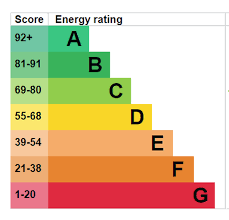
An Energy Performance Certificate (EPC) rates a property’s energy efficiency on a scale from A (most efficient) to G (least efficient) and is legally required whenever a property is built, sold, or rented out in the UK. It is valid for 10 years, and it details estimated energy costs and practical recommendations for improvement.
You can find, download, or order an EPC through the official government services:
- England, Wales, or Northern Ireland: Check for an existing certificate or find an accredited assessor on the GOV.UK Find an Energy Certificate page.
- Scotland: Use the dedicated Scottish EPC Register to search for property certificates.
Key Details to Know:
- Cost: An EPC assessment typically costs between £60 and £120 for residential properties, depending on the size and location of the home. An EPC test needs to be undertaken by an accredited assessor and to locate one visit Get a new energy certificate – GOV.UK
- Assessments: A qualified, accredited Domestic Energy Assessor will visit your property, which takes about 30 to 60 minutes.
- Penalties: Failure to provide a valid EPC to prospective buyers or tenants can result in penalty fines and up to £500 for residential properties in England and Wales or £200 in Scotland
- Landlord Obligations: In England and Wales, privately rented properties typically must meet a minimum rating of E. (Exemptions apply for certain structures like listed buildings).